Laser Setup Overview
Selecting a desktop laser engraver is rarely as simple as picking an advertised wattage rating. Buyers routinely encounter burned underside edges, cracked glassware, or beam reflections that fail to leave a legible mark on the intended substrate.
These issues stem from a mismatch between the laser source architecture and the mechanical setup supporting the beam path. Each laser source emits an optical wavelength dictating how substrates absorb, reflect, or transmit beam energy.
Laser Architectures
Desktop laser systems fall into four primary categories based on beam generation. Each addresses distinct fabrication tasks, power densities, and substrate requirements:
- Diode Lasers (~450 nm): Solid-state visible blue emitters for softwoods, tooling leather, and dark acrylic; transmits through clear acrylic and glass.
- CO2 Lasers (10,600 nm): Long-wave infrared gas discharge tubes absorbed by wood, paper, stone, leather, glass, and clear acrylic; requires flying optics.
- Fiber Lasers (~1064 nm): Rare-earth doped near-infrared galvo systems for direct marking on bare metals and dense plastics without cutting thick stock.
- UV Lasers (~355 nm): Short-wavelength 355 nm beam for photochemical ablation without thermal stress, ideal for delicate electronics and thin glassware.
Featured Accessories
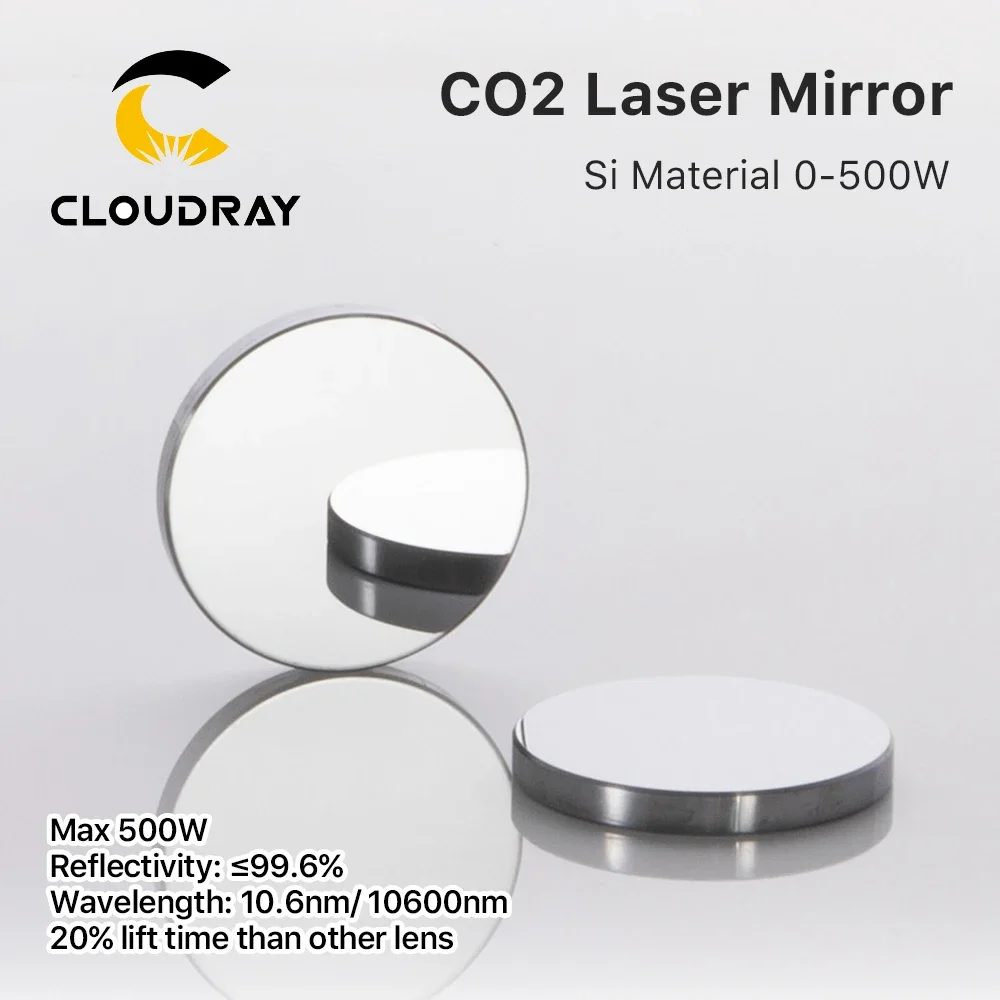
Cloudray 500W Co2 Laser Si Reflective Mirrors Lens Refiectivity 99.6% Black-C…
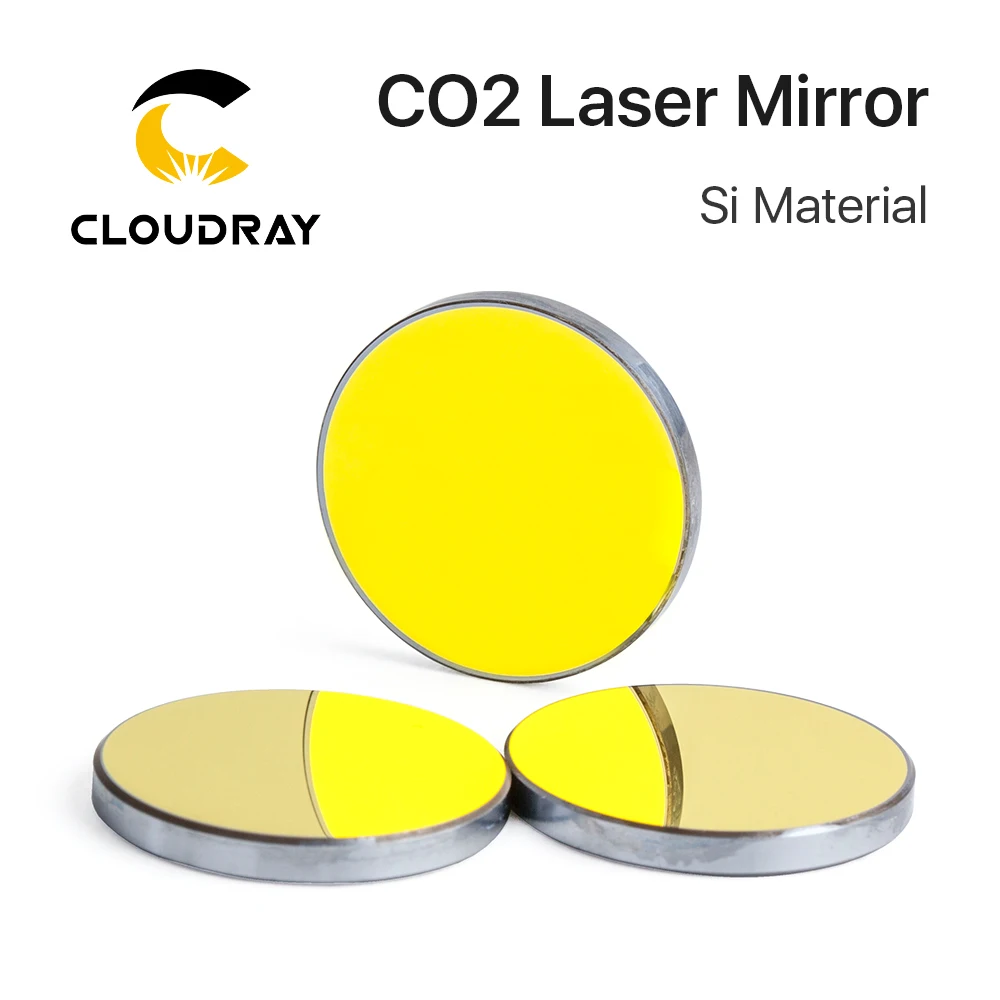
Cloudray Co2 Laser Si Reflective Mirrors for Laser Engraver Gold-Plated Silic…

ACMER Laser Cutting Honeycomb Working Table for CO2 or diode Laser Engraver C…
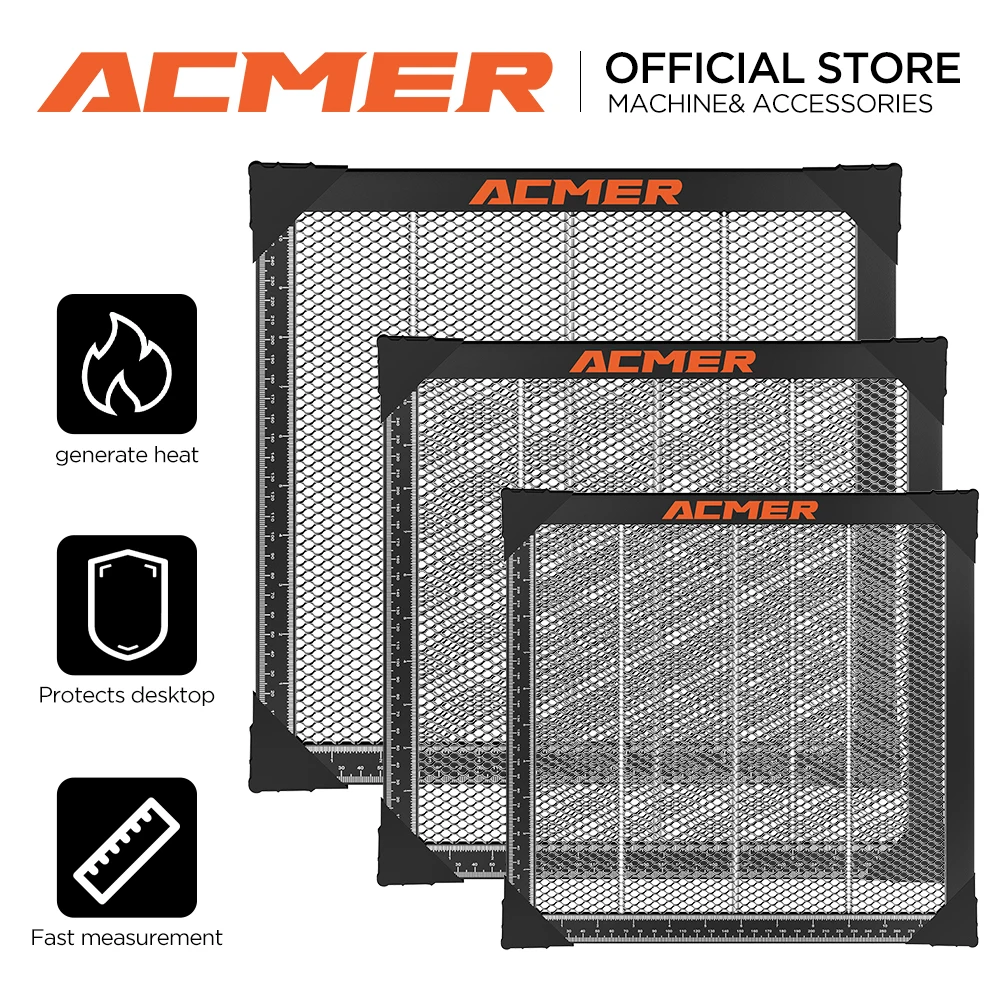
ACMER Laser Engraving Honeycomb Working For CO2 CNC Diode Laser Engraver Cutt…
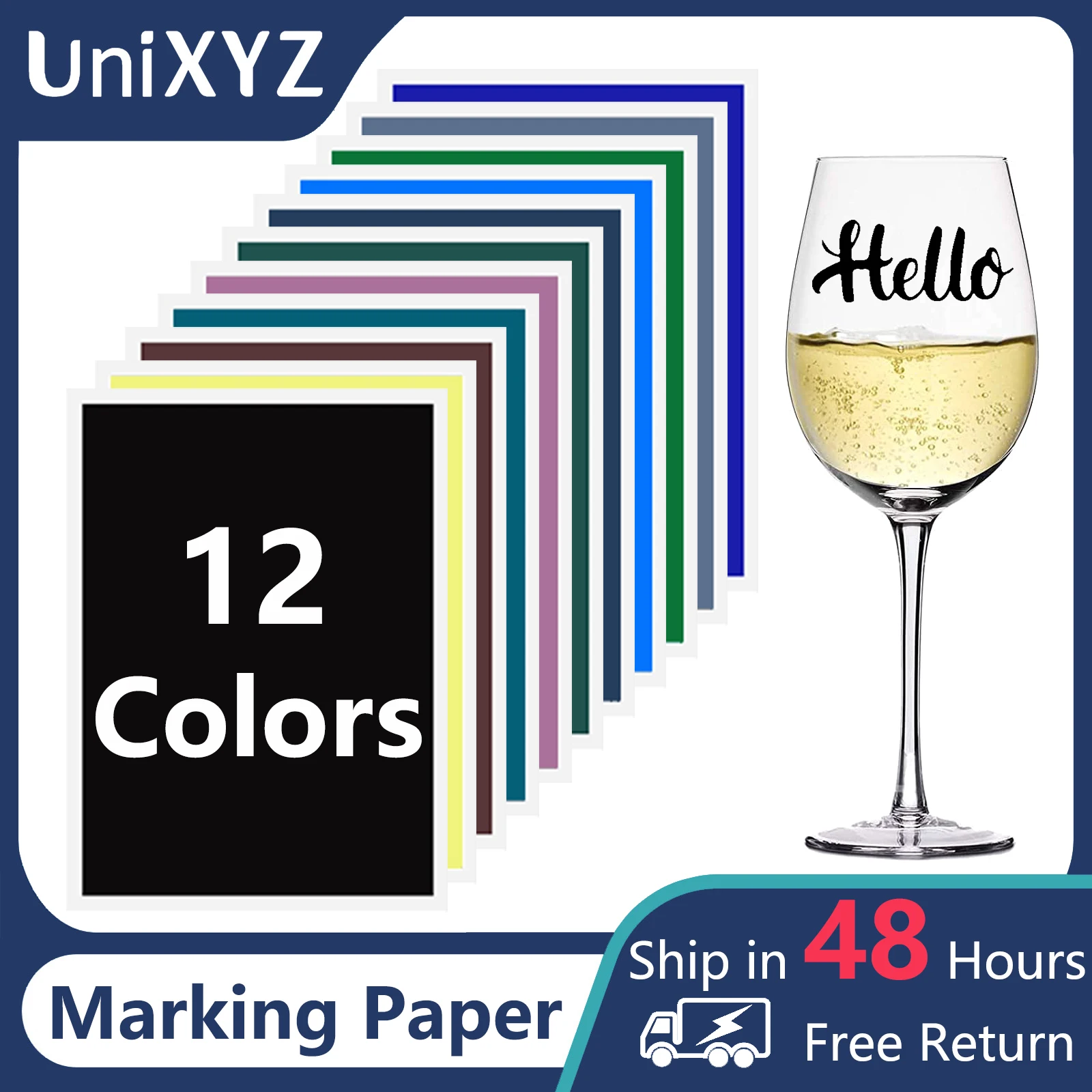
Colored Laser Engraving Marking Paper for CO2 Fiber UV Laser Engraver Machine…
Component Specifications
| Product | Component Type | Laser Compatibility | Key Specification |
|---|---|---|---|
| Cloudray 500W Co2 Laser Si Reflective Mirrors Lens Refiectivity 99.6% Black-Coating Reflector Lens for CO2 Laser Engraver | Steering Mirror | CO2 (up to 500W) | 99.6% Reflectivity Si Optic |
| Cloudray Co2 Laser Si Reflective Mirrors for Laser Engraver Gold-Plated Silicon Reflector Lenses Dia. 19 20 25 30 38.1 mm | Steering Mirror | CO2 | Gold-Plated Si (19-38.1mm) |
| ACMER Laser Cutting Honeycomb Working Table for CO2 or diode Laser Engraver Cutting Machine 300x300/330x330/400x400/440x440x22mm | Working Table | Diode & CO2 | 22mm Height, Multiple Sizes |
| ACMER Laser Engraving Honeycomb Working For CO2 CNC Diode Laser Engraver Cutting Machine Honeycomb Bed 400X400mm 440X440mm | Working Bed | Diode, CNC & CO2 | 400x400 / 440x440 mm Formats |
| Colored Laser Engraving Marking Paper for CO2 Fiber UV Laser Engraver Machine Tools for Ceramics Glass Crystal Stone Tiles | Marking Paper | Diode, CO2, Fiber, UV | Thermal Pigment Transfer |
Accessory Selection Matrix
| Product | Thermal/Optical Efficiency | Substrate Versatility | Ease of Integration |
|---|---|---|---|
| Cloudray 500W Co2 Laser Si Reflective Mirrors Lens Refiectivity 99.6% Black-Coating Reflector Lens for CO2 Laser Engraver | 10 | 6 | 8 |
| Cloudray Co2 Laser Si Reflective Mirrors for Laser Engraver Gold-Plated Silicon Reflector Lenses Dia. 19 20 25 30 38.1 mm | 9 | 8 | 8 |
| ACMER Laser Cutting Honeycomb Working Table for CO2 or diode Laser Engraver Cutting Machine 300x300/330x330/400x400/440x440x22mm | 8 | 9 | 9 |
| ACMER Laser Engraving Honeycomb Working For CO2 CNC Diode Laser Engraver Cutting Machine Honeycomb Bed 400X400mm 440X440mm | 8 | 9 | 9 |
| Colored Laser Engraving Marking Paper for CO2 Fiber UV Laser Engraver Machine Tools for Ceramics Glass Crystal Stone Tiles | 6 | 10 | 7 |
Optics & Bed Surfaces
In flying-optics systems, high-reflectivity silicon mirrors maintain optical integrity across beam redirections. Reflectivity loss dissipates laser energy as heat, degrading cut performance at the focal surface.
Honeycomb support beds elevate sheet stock above solid tables to prevent back-flash scorching, facilitate down-draft ventilation, and keep thin materials completely flat throughout cutting operations.
Cloudray 500W Co2 Laser Si Reflective Mirrors Lens Refiectivity 99.6% Black-C…
ACMER Laser Cutting Honeycomb Working Table for CO2 or diode Laser Engraver C…
Colored Laser Engraving Marking Paper for CO2 Fiber UV Laser Engraver Machine…
Specification Analysis
Known facts
Silicon mirror reflectivity is rated up to 99.6% for CO2 laser wavelengths.
Honeycomb platforms measure 22 mm in height across footprints up to 440x440 mm.
Laser marking paper enables multi-wavelength thermal pigment transfer on non-porous surfaces.
Analysis
Proper mirror coatings prevent power drop-off across multiple beam bounce points.
Elevated honeycomb cells evacuate hot air and debris, eliminating back-flash burn patterns.
Uncertainties
Long-term coating durability under aggressive chemical cleaning routines was not measured.
Trade-offs and Limitations
- Coated silicon mirrors scratch easily if cleaned with abrasive towels or improper cleaning solvents.
- Incorrect mirror diameter choice causes loose mounting and optical misalignment in CO2 mirror holders.
- Honeycomb beds accumulate flammable resins and adhesive oils requiring recurring chemical cleaning.
- Open honeycomb frames without a protective bottom catch plate risk scorching the worktable underneath.
- Laser marking paper demands manual water application and washing, slowing production workflows.