Desktop laser engraving has split into two primary worlds: compact industrial fiber workstations designed for high-speed metal marking, and diode or CO2 gantry systems that rely on dedicated workbed accessories to cut wood, acrylic, and leather cleanly. Choosing the right setup requires matching the laser wavelength and machine structure to your target materials, while ensuring you have the necessary optical and protective components.
Below is a breakdown of verified desktop laser equipment and key accessories currently available, evaluated through technical specifications and user feedback data to help you build or upgrade a functional engraving workshop.
Key Decision Criteria for Desktop Laser Systems
Before purchasing a desktop laser engraver or upgrading your existing workstation, evaluate these fundamental technical factors:
- Wavelength & Laser Source: A 1064nm optical fiber laser is engineered specifically for marking metals (such as stainless steel, brass, aluminum, gold, and silver) and certain hard plastics. In contrast, standard diode and CO2 lasers (typically 450nm and 10,600nm respectively) are suited for organic materials like wood, leather, and acrylic.
- Galvo Scanning vs. Gantry Movement: Fiber marking systems generally use stationary galvo heads with high-speed mirrors and F-theta lenses, providing extreme marking speeds across a concentrated field (such as 110×110mm). Gantry systems move the laser module across X and Y axes, trading speed for larger working areas (such as 400×400mm).
- Focal Length and Field Size: For galvo fiber systems, the F-theta scan lens determines the marking area (e.g., 50×50mm up to 300×300mm) and focal depth (F63 to F420mm). A smaller field concentrates beam energy for deeper engraving, while a wider field accommodates larger objects at the expense of energy density.
- Under-Workpiece Ventilation & Reflection Protection: When using open-frame diode or CO2 cutters, placing materials directly on a flat surface causes heat buildup and underside burn marks. Honeycomb working tables allow smoke evacuation and reduce laser back-reflection.

ACMER Laser Cutting Honeycomb Working Table for CO2 or diode Laser Engraver C…
Detailed Reviews of Verified Laser Systems & Hardware
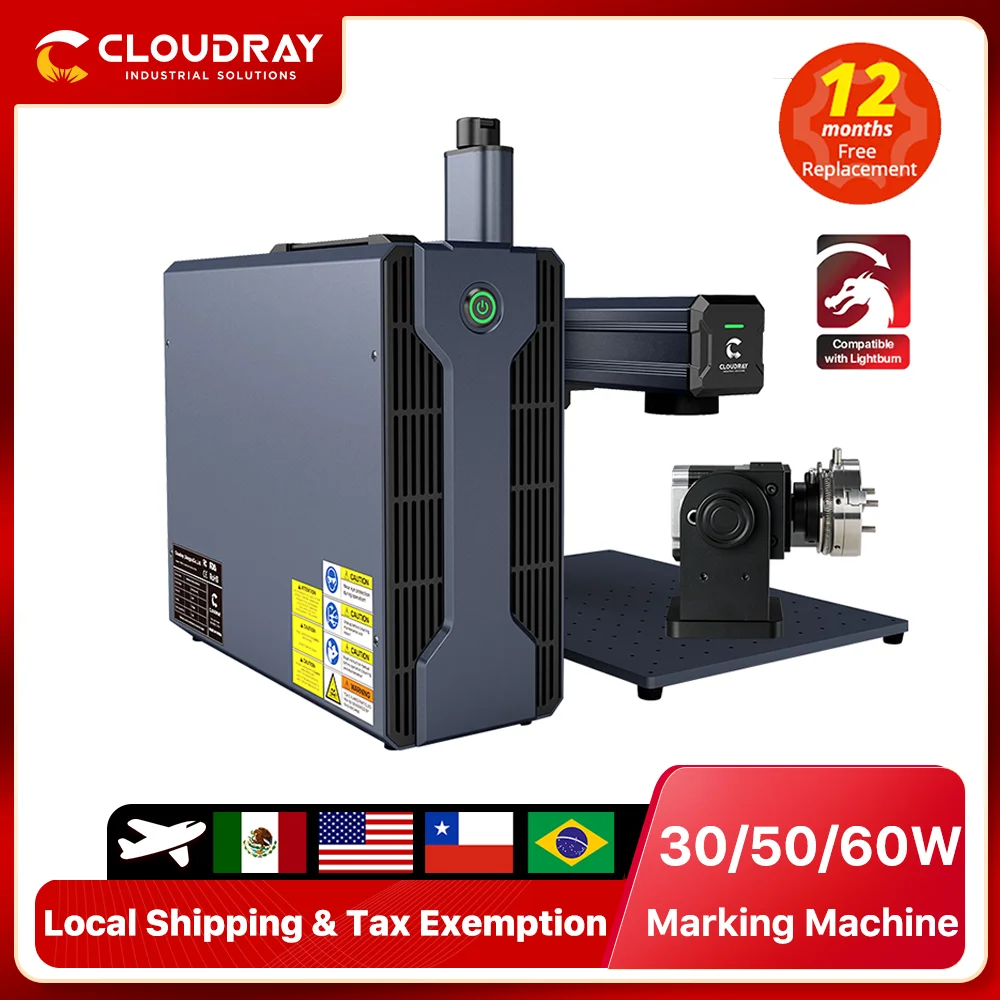
Cloudray 30W / 50W / 60W Fiber Laser Marking Machine
Primary Function: Dedicated high-precision metal engraving and marking station.
Reference Price: $1,919.20 (Reference global pricing; subject to change)
User Feedback Rating: 98% positive score (90 reviews)
The Cloudray Fiber Laser Marking Machine is a specialized desktop industrial unit designed for users who need permanent marking, etching, and fine cutting on metals, including gold, silver, stainless steel, copper, and aluminum sheets. Equipped with a 110×110mm working area, this machine utilizes galvo mirror deflection to achieve rapid, repeatable markings ideal for jewelry customization, serial numbering, and tool identification.
Who it's for: Professional jewelers, metal fabricators, and makers needing dedicated, high-speed metal engraving that diode lasers cannot replicate.
Limitations: With a reference price around $1,919.20 and a focused 110×110mm default working envelope, it represents a substantial investment and is not configured for large-format wood or acrylic cutting.
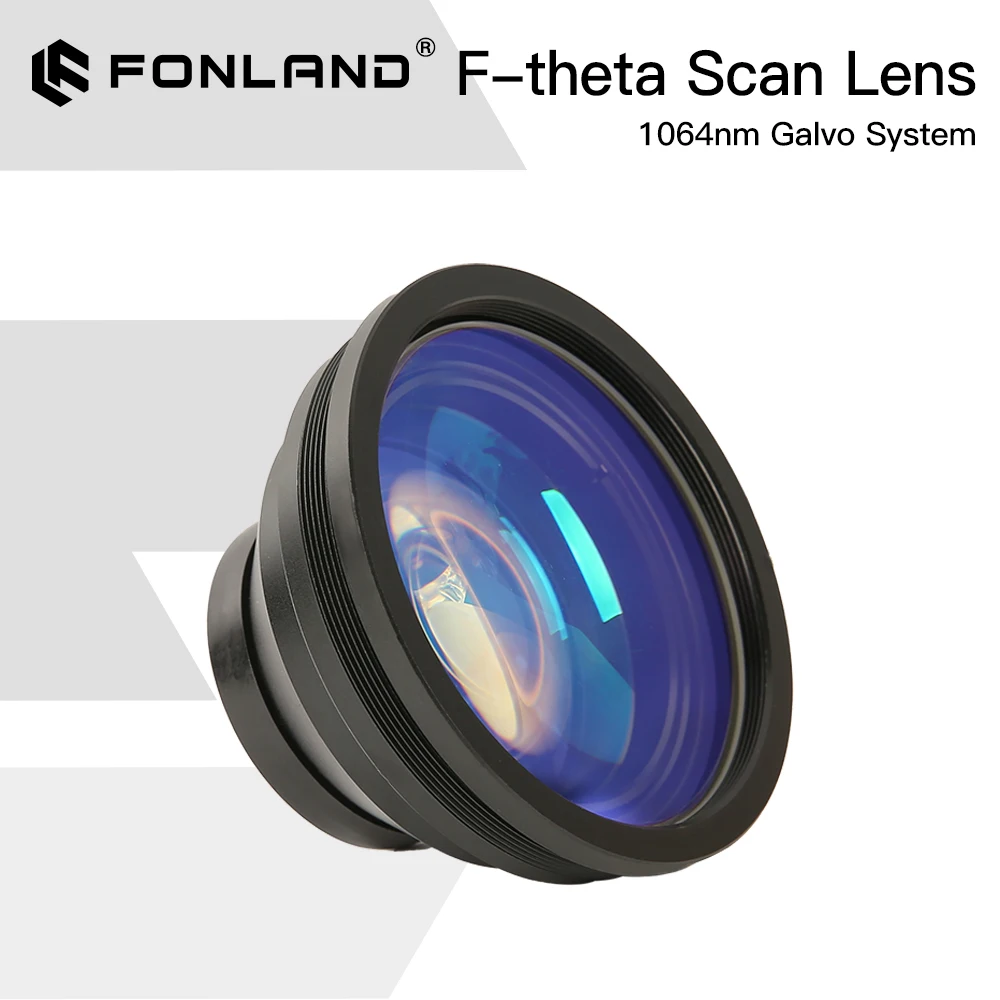
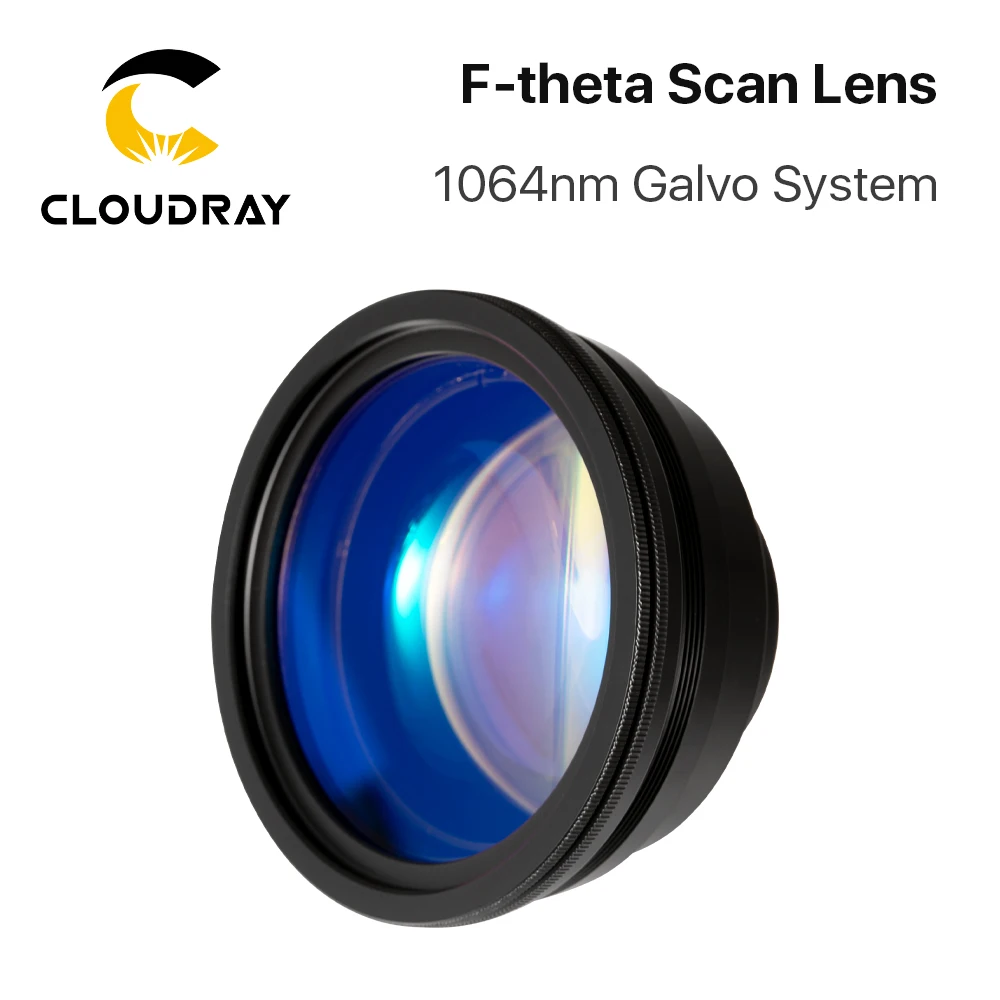
F-theta Scan Lens 1064nm (50×50mm to 300×300mm, F63–420mm)
Primary Function: Optical field lens replacement and field expansion for 1064nm YAG/Fiber markers.
Reference Price: $25.18 – $52.70 depending on listing variant (Reference global pricing; subject to change)
User Feedback Rating: 99.6% (119 reviews) for the $25.18 listing; 100% (101 reviews) for the $52.70 listing
F-theta scan lenses are the optical core of galvo-driven 1064nm fiber marking machines. These field lenses focus the collimated laser beam evenly across a flat planar area ranging from 50×50mm up to 300×300mm with focal lengths spanning F63mm to F420mm. Users can swap lenses depending on whether they require high energy concentration for deep metal etching (shorter focal length/smaller field) or broader coverage for multi-item batch marking (longer focal length/larger field).
Who it's for: Fiber laser owners who need replacement optics or wish to adjust their marking field dimensions and focal depth.
Limitations: Optical compatibility requires strict matching to 1064nm fiber laser systems; these lenses cannot be used on 450nm blue diode or 10,600nm CO2 systems.
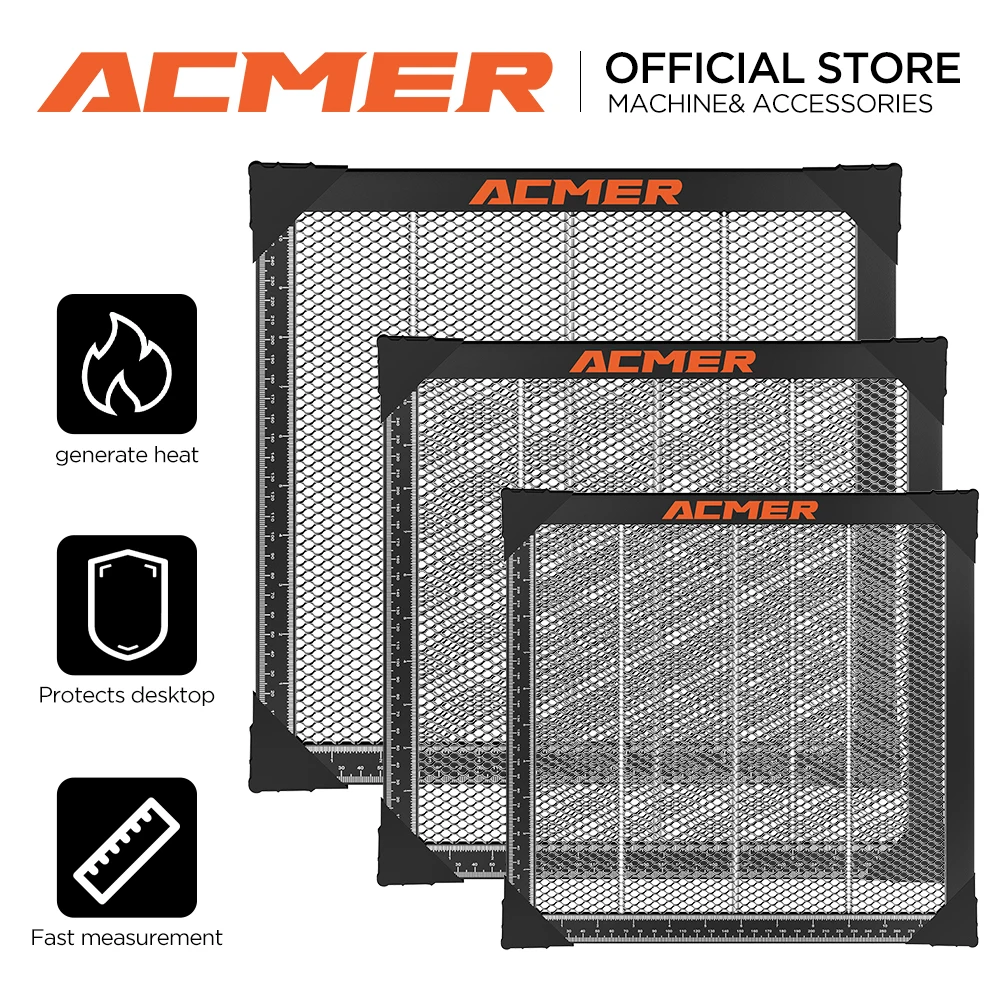
ACMER Laser Cutting Honeycomb Working Table (Multi-Size Options)
Primary Function: Smoke exhaust and back-reflection support bed for diode and CO2 engravers.
Reference Price: $25.46 (Reference global pricing; subject to change)
User Feedback Rating: 97.5% (570 reviews for the 300×300 to 440×440×22mm model); 96.8% (285 reviews for the 400×400 to 440×440mm model)
Available in several dimension standards including 300×300mm, 330×330mm, 400×400mm, and 440×440mm with a 22mm depth profile, the ACMER Honeycomb Working Table is a foundational safety and quality upgrade for open-frame desktop diode and CO2 machines. The open cellular structure allows air and laser exhaust to pass through cleanly, protecting worktables from direct beam strikes and preventing soot accumulation on the bottom of cut materials.
Who it's for: Diode and CO2 desktop laser operators working with wood, acrylic, or leather who need cleaner cuts and desktop protection.
Limitations: This is a passive mechanical accessory, not an engraver. Buyers must measure their machine's inner frame dimensions carefully to ensure the outer dimensions fit within their gantry footprint.
Audience Guidance & Buying Recommendations
| User Profile | Recommended Component / Machine | Primary Objective |
|---|---|---|
| Jewelry Maker / Metal Fabricator | Cloudray Fiber Laser Marking Machine (30/50/60W) | Fast, high-contrast marking and light cutting on precious metals, brass, steel, and aluminum. |
| Fiber Laser Operator Upgrading Optical Range | 1064nm F-theta Scan Lens (F63–420mm) | Modifying field coverage between 50×50mm (high power density) and 300×300mm (wide area). |
| Diode / CO2 Craft Engraver | ACMER Honeycomb Working Table (300mm–440mm) | Preventing bottom-side burn marks and safeguarding work surfaces during organic material cutting. |
ACMER Laser Engraving Honeycomb Working For CO2 CNC Diode Laser Engraver Cutt…
Safety, Maintenance, and Operational Trade-Offs
Operating desktop laser equipment requires strict adherence to workshop safety protocols:
- Wavelength-Specific Eye Protection: Standard safety glasses do not protect against all lasers. 1064nm fiber lasers require certified OD6+ protection at that specific infrared wavelength, while blue diode engravers (around 450nm) require dedicated protective shielding for visible blue light.
- Fume Extraction: Both metal ablation and organic cutting produce toxic fine particulate matter and volatile organic compounds (VOCs). A dedicated exhaust fan or air purifier is mandatory when working indoors.
- Optical Cleanliness: F-theta lenses and laser output windows must be inspected regularly and kept free of dust and vapor deposits, as dirt on optics absorbs laser energy and can cause thermal cracking.
How We Evaluated
This guide is based on objective specification analysis, structural compatibility assessments, verified aggregate marketplace feedback, and published manufacturer parameters. We did not perform independent destructive testing or physical bench benchmarks. Pricing figures reflect global baseline references at the time of publication and are subject to market changes, component availability, and configuration options.