Laser engraving has expanded from industrial fabrication into compact desktop workshops, driven primarily by two complementary technologies: diode lasers and fiber lasers. Understanding the mechanical, optical, and electronic differences between these systems is essential when choosing, building, or maintaining a machine. While diode lasers provide an accessible gateway for organic materials and coated substrates, fiber lasers deliver high-speed, direct marking on bare industrial metals. Behind both systems lie critical motion systems, 32-bit controllers, and test substrates that dictate final engraving precision.
Diode vs. Fiber Laser Architecture: Understanding the Difference
Selecting between a diode system and a fiber system depends largely on the light wavelength, beam delivery method, and the material being processed.
- Diode Lasers (Visible Light, ~445–455 nm): Diode lasers use semiconductor junctions to generate a visible blue beam. Because organic compounds absorb this wavelength efficiently, diode engravers excel at cutting and engraving wood, leather, paper, dark acrylics, and coated surfaces. However, bare, reflective metals reflect most of this energy, requiring specialized surface coatings or high-absorption anodized layers for marking.
- Fiber Lasers (Infrared, ~1064 nm): Fiber laser systems produce an infrared beam generated by a laser diode seed and amplified inside optical fibers doped with rare-earth elements (such as ytterbium). This 1064 nm wavelength is readily absorbed by metals (aluminum, brass, copper, stainless steel, titanium) and engineered plastics. Paired with high-speed galvanometer (galvo) mirrors, fiber lasers mark metals rapidly without needing preparatory sprays.
MKS DLC32 V2.1 Offline Controller Board 32bits ESP32 WIFI GRBL Motherboard Fo…
Core Controllers for Laser Gantry Systems
Modern diode setups and open-frame CNC laser engravers rely on 32-bit microcontrollers running optimized GRBL firmware to translate vector designs into coordinate movements and pulse-width modulation (PWM) laser power control.
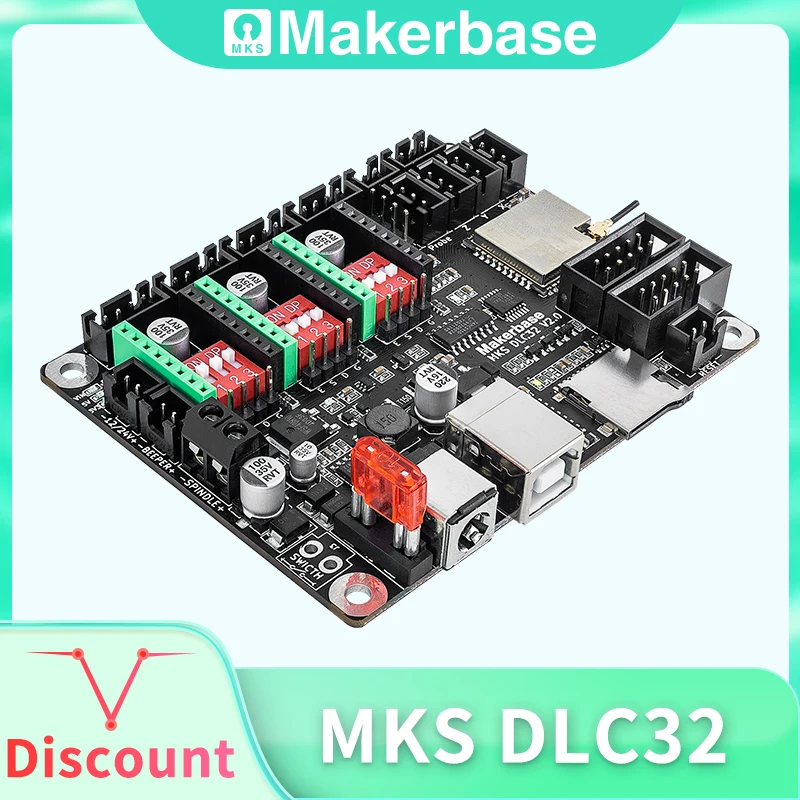
MKS DLC32 V2.1 Offline Controller Motherboard
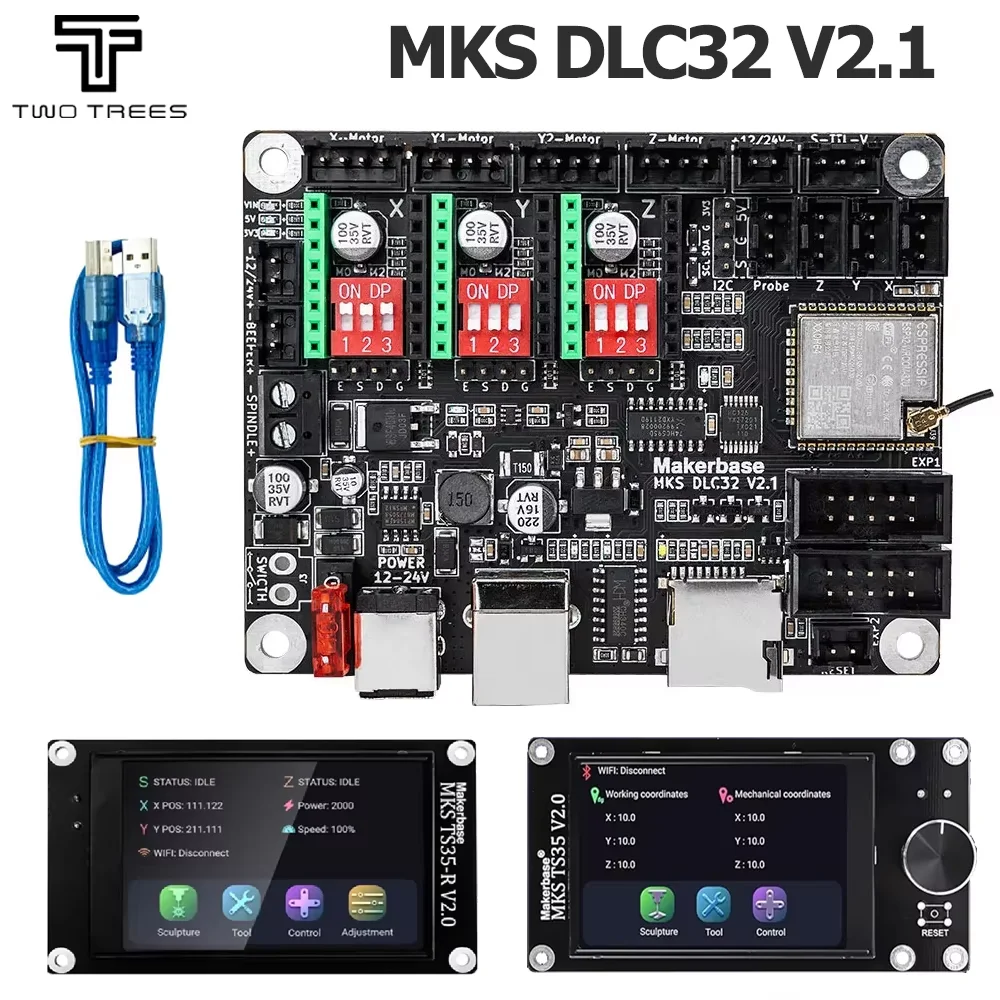
The MKS DLC32 V2.1 Offline Controller Board (reference price: $6.14 USD; 96.1% rating score across 499 reviews) serves as a primary motherboard replacement or build foundation for desktop laser engraving machines. Powered by a 32-bit ESP32 microcontroller, it provides onboard Wi-Fi functionality, offline processing, and compatibility with the TS35 touch screen display. It suits builders who want to upgrade older 8-bit engravers to a system capable of faster step rates, smoother acceleration curves, and web- or mobile-based offline control.
Makerbase MKS DLC32 Controller with TS35/TS24 Interface
For a complete offline control bundle, the Makerbase MKS DLC32 Grbl Controller (reference price: $18.05 USD; 87.1% rating score across 589 reviews) pairs the 32-bit ESP32 board with a dedicated TS35/24 touch screen interface. This unit is intended for makers operating standalone laser and CNC stations without maintaining a dedicated, tethered PC connection. The touch display enables real-time origin setting, file navigation from an SD card, and rapid frame previewing directly at the workbench.
Motion Systems: Precision Steppers and High-Current Drivers
Whether tracing intricate raster engravings or vector-cutting thick plywood with high-power diode modules, the precision of a gantry laser relies heavily on its motion hardware.
Usongshine Nema17 Stepper Motor (17HS4401)
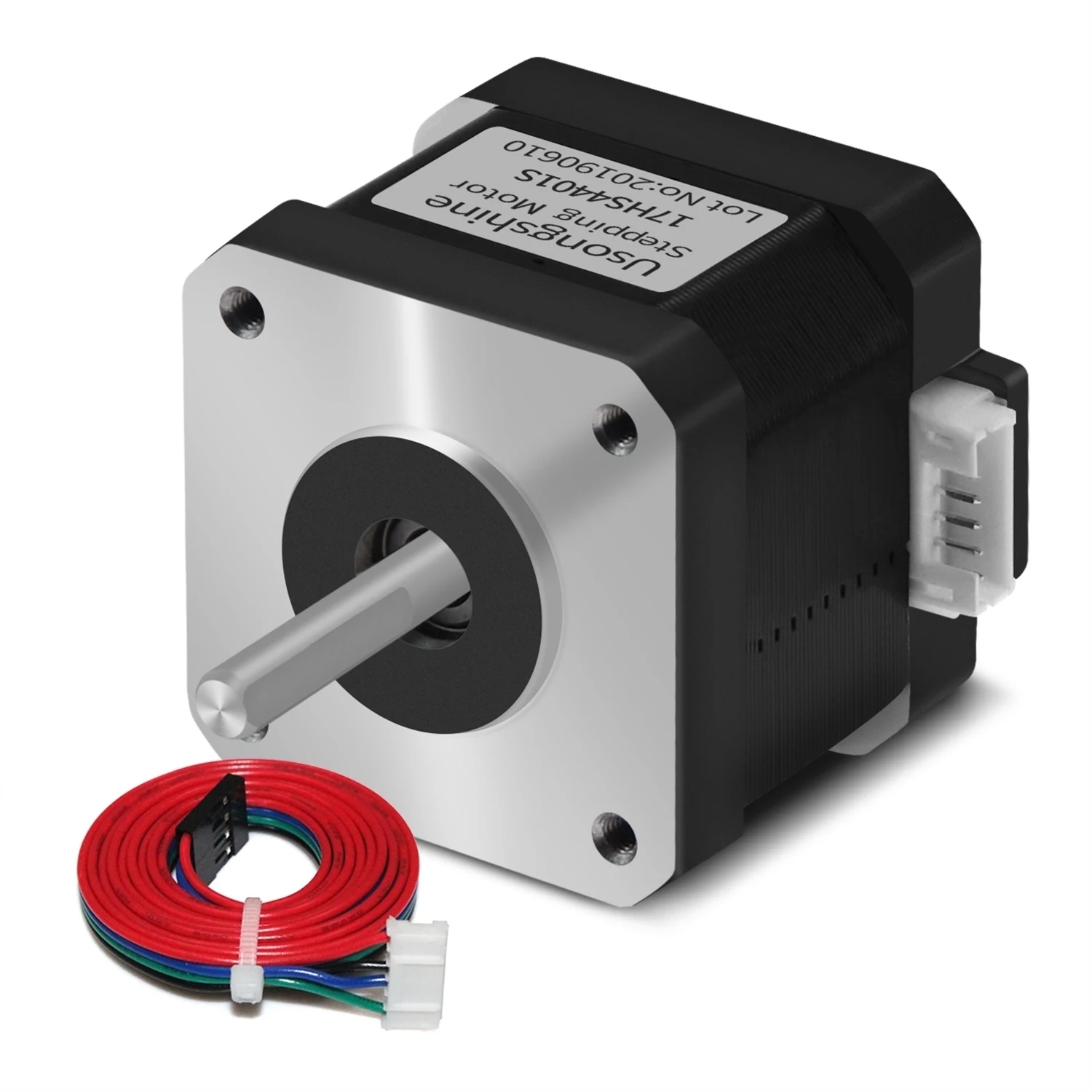
The Usongshine Nema17 Stepper Motor 17HS4401 (reference price: $8.42 USD; 97.8% rating score across 1,487 reviews) is a standard workhorse for X- and Y-axis gantry movement. Featuring a 1.8° step angle (200 steps per revolution), 1.5A rated current, 42N.cm holding torque, and a standard 42BYGH 4-lead configuration, this motor delivers sufficient torque to move laser optical modules and gantry carriages smoothly without skipping steps during rapid acceleration passes.
TB6600 Stepper Motor Driver
To power larger Nema17 or Nema23 stepper configurations, the Upgrade Nema23 Stepper Motor Driver TB6600 (reference price: $5.68 USD; 97.5% rating score across 868 reviews) provides an adjustable drive output up to 4A across a DC 9–42V operating range. This external driver is an ideal upgrade for DIY builders who require higher drive current, improved thermal dissipation, and microstepping isolation compared to compact plug-in driver modules.
50Pcs Laser Marking Blank Card DIY Aluminum Metal Name Card 85 55mm Engraving…
Calibration and Surface Marking Substrates
Calibrating focus height, power percentages, and speed parameters requires consistent test materials. This is especially true when setting up line intervals for diode surface marking or fine-tuning hatch patterns on fiber laser machines.
Anodized Aluminum Blank Metal Cards (50 Pcs)
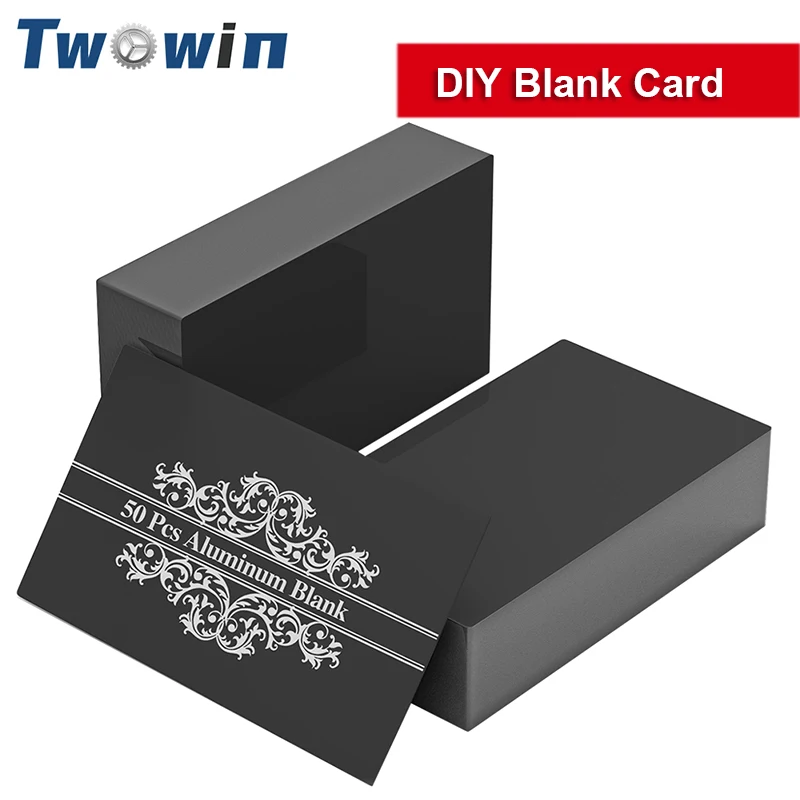
The 50Pcs Laser Marking Blank Card set (reference price: $10.19 USD; 98.6% rating score across 1,010 reviews) provides 85 x 55 mm aluminum blanks suitable for testing and finished production. On diode laser systems, the beam ablates the anodized/painted layer to reveal the contrasting metal underneath. On fiber systems, these blanks can be processed with varying frequencies and power levels for direct metal ablation, fine detail marking, and creating durable custom metal cards.
Hardware Selection Guide
| Component | Primary Function | Key Technical Specifications | Best Suited For |
|---|---|---|---|
| MKS DLC32 V2.1 Board | Mainboard / Motion Logic | 32-bit ESP32, GRBL compatibility, Wi-Fi support | Cost-effective DIY builds and 8-bit motherboard upgrades |
| Makerbase MKS DLC32 + TS Screen | Offline Controller System | ESP32 Wi-Fi, TS35/TS24 touchscreen display | Standalone workshops requiring PC-free machine control |
| Usongshine 17HS4401 Motor | Gantry Actuation | 1.8° step angle, 1.5A, 42N.cm holding torque, 4-lead | Desktop laser gantry axes and 3D printer conversions |
| TB6600 Stepper Driver | High-Current Motor Drive | DC 9–42V input, up to 4A output, microstepping support | Heavy-duty gantries, Nema23 upgrades, and industrial CNC routers |
| 50Pcs Aluminum Blanks | Calibration & Production | 85 x 55 mm dimensions, anodized aluminum sheet | Focus testing, power grid calibration, and finished nameplates |
Usongshine Nema17 Stepper Motor 17HS4401 1.8 ° Motor 1.5A 42N.cm 42BYGH 4-lea…
Decision Framework for Laser Builders and Upgraders
- Determine Material Scope: If your workflow consists primarily of timber, acrylic, cardboard, and surface-treated items, a diode gantry system provides the most versatile and cost-effective foundation. If you require deep, high-volume direct engraving on bare metals like steel, brass, or raw aluminum, plan for a dedicated 1064 nm fiber unit.
- Upgrade Control Architecture: Upgrading from legacy controllers to a 32-bit ESP32-based motherboard like the MKS DLC32 eliminates motion stutter during complex curve calculations and enables untethered operation via offline screens or local wireless networks.
- Match Motion Power: Ensure your stepper drivers (such as the TB6600) are calibrated to supply the correct current for your stepper motors (such as the 1.5A 17HS4401), preventing motor overheating while maintaining sufficient holding torque to prevent layer shift errors.
- Standardize Calibration: Keep consistent test media—such as 85 x 55 mm aluminum blanks—on hand to map speed and power matrices whenever swapping focal lenses, adjusting beam alignment, or testing new laser head modules.
Note: All prices referenced above reflect global baseline USD figures at the time of publication and are subject to change depending on configuration, supplier updates, and regional adjustments.